

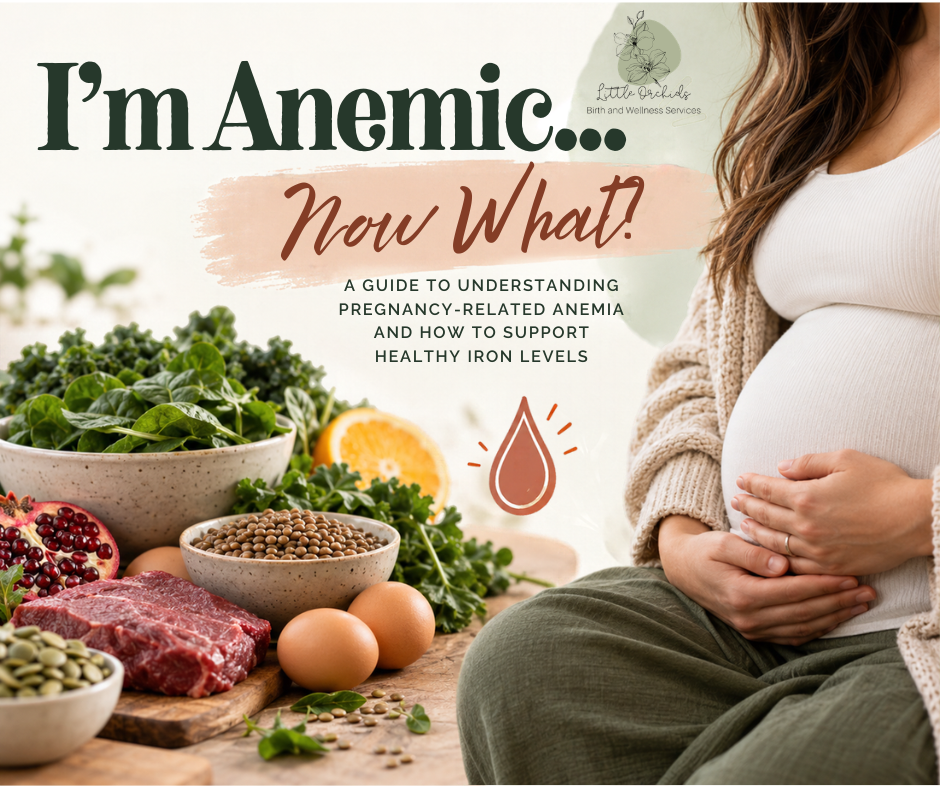
I’m Anemic….Now What??
Pregnancy changes just about everything in your body, including your blood! Mild changes in blood counts are common during pregnancy, but true anemia should be addressed.
If you've been told your hemoglobin is low, your ferritin is dropping, or you need to increase your iron intake, you probably have questions. Do you need an iron supplement? Can you improve your levels through food? How are you still anemic if your prenatal vitamin includes iron?
What Is Anemia During Pregnancy?
Anemia happens when your blood doesn't have enough healthy red blood cells or hemoglobin to carry oxygen efficiently throughout your body.
Hemoglobin is the iron-containing protein in red blood cells that transports oxygen to your tissues and your growing baby.
During pregnancy, your body changes significantly in order to support your baby's development. Your blood volume increases dramatically, and the amount of iron you need increases to support your growing red blood cell supply, placenta, and baby.
The liquid portion of your blood (plasma) actually increases more than your red blood cell mass. This can make your hemoglobin and hematocrit appear lower, even when your body is adapting normally to pregnancy. While you gain more blood volume, you do not gain extra red blood cells.
This process is called physiologic hemodilution, sometimes referred to as the physiologic anemia of pregnancy.
However, not every decrease in hemoglobin is normal pregnancy dilution. Nutritional deficiencies and other medical conditions can also cause anemia, so it’s important to monitor your labs.
Why Does Anemia Matter?
Iron and healthy red blood cells are essential for a healthy pregnancy.
Adequate iron supports:
Oxygen delivery throughout your body
Placental function and fetal development
Your baby's developing brain and nervous system
Your body's ability to tolerate the normal blood loss associated with birth
Recovery and replenishment of iron stores postpartum
Untreated iron deficiency anemia has been associated with increased risks of preterm birth, low birth weight, and postpartum anemia. More severe anemia can also reduce your body's ability to tolerate blood loss during delivery, especially if you bleed heavily.
The good news? Many cases of pregnancy-related anemia are manageable once we understand the underlying cause.
Signs and Symptoms of Anemia During Pregnancy
Some people with mild anemia experience no noticeable symptoms; this is why it’s standard to check everyone for anemia early in the third trimester. Others may notice changes that are easily mistaken for typical pregnancy discomforts.
Common symptoms include:
Extra severe fatigue
Dizziness or lightheadedness
Headaches
Shortness of breath with activity
Heart palpitations or a faster heart rate
Pale skin or pale inner eyelids
Difficulty concentrating
Feeling unusually cold
Restless legs
Craving ice or nonfood substances (called pica)
Since fatigue, breathlessness, and occasional dizziness can be common in healthy pregnancies as well, labs should be run to assess for anemia.
Important: Chest pain, fainting, significant shortness of breath at rest, or persistent racing heartbeat should be evaluated promptly instead of assumed to be caused by low iron.
Understanding Your Pregnancy Blood Work
Hemoglobin (Hgb)
Hemoglobin measures the oxygen-carrying protein in your red blood cells.
Depending on the source, you are typically considered anemic in pregnancy if your Hgb drops below 11-11.5 g/dL. For those planning a home birth, we need your levels to be at least 11.5 g/dL.
Hematocrit (Hct)
Hematocrit measures the percentage of your blood that is made up of red blood cells.
Low hematocrit can accompany anemia, although it must be interpreted alongside other laboratory findings.
Ferritin: Your Iron Stores
Ferritin is one of the most helpful measurements when checking for iron deficiency.
Think of hemoglobin as the iron that is currently being used to transport oxygen and ferritin as a marker for how much iron you have stored.
Your hemoglobin could still be within the normal range, even when your iron stores are becoming depleted.
In pregnancy, a ferritin level below roughly 30 ng/mL is commonly used to identify iron deficiency. Ideally, ferritin is 45 ng/mL or higher.
This means you can have low iron stores, therefore being iron deficient, without yet developing anemia.
Ferritin can also rise during inflammation or infection, so a normal or elevated ferritin result doesn't always completely rule out iron deficiency.
MCV and Other Red Blood Cell Measurements
Your complete blood count (CBC) also includes measurements describing the size and characteristics of your red blood cells.
MCV, or mean corpuscular volume, can help guide further evaluation:
Low MCV: Often associated with iron deficiency or thalassemia
High MCV: May suggest vitamin B12 or folate deficiency
Normal MCV: Can occur with early iron deficiency, blood loss, inflammation, or mixed nutritional deficiencies
Additional testing may include Transferrin Saturation, Iron Studies, Vitamin B12, Folate, or hemoglobinopathy screening.
The Different Types of Anemia During Pregnancy
1. Iron Deficiency Anemia
Iron deficiency anemia is the most common nutritional anemia during pregnancy.
Your body needs iron to manufacture hemoglobin. When your iron stores become depleted, your body can eventually struggle to produce enough healthy red blood cells.
Iron deficiency can develop from the increased demands of pregnancy, low dietary iron intake, depleted iron stores before conception, previous blood loss, or difficulty absorbing iron.
People carrying multiples, experiencing closely spaced pregnancies, or following diets with limited iron sources are at increased risk.
What helps: Iron-rich foods, iron supplementation, improved absorption strategies, and addressing any underlying causes.
If you’ve been anemic for a long time, dietary changes alone often aren’t enough to replenish iron stores quickly.
2. Folate Deficiency Anemia
Folate (Vitamin B9) is essential for making DNA and healthy red blood cell production.
Pregnancy increases the amount of folate needed since your body supports rapid cell growth and fetal development.
Folate is also critical early in pregnancy for neural tube development.
Food sources include leafy greens, asparagus, beans, lentils, avocado, and fortified grains.
What helps: Adequate folate intake through food and prenatal supplementation, with additional treatment when a deficiency is confirmed.
Folate deficiency should be evaluated alongside Vitamin B12 status when appropriate, since high-dose folic acid can correct some blood abnormalities while leaving an underlying B12 deficiency untreated.
3. Vitamin B12 Deficiency Anemia
Vitamin B12 helps your body produce healthy red blood cells and supports normal nervous system function.
Deficiency can occur with limited animal-product intake, certain gastrointestinal conditions, prior bariatric surgery, or impaired absorption.
Symptoms include fatigue, weakness, numbness, tingling, balance issues, or changes in memory and concentration.
Food sources include meat, fish, eggs, dairy products, and fortified foods.
What helps: B12 supplementation or injections, depending on the severity and underlying cause.
B12 deficiency is especially important to recognize since neurological complications can happen, even without significant anemia.
4. Anemia Associated With Inflammation or Chronic Illness
Some medical conditions can interfere with the body's ability to use stored iron or produce red blood cells.
Chronic inflammation, kidney disease, certain autoimmune conditions, and other illnesses can also contribute.
In these cases, the body may have iron, but less of it is available for red blood cell production.
What helps: Identifying and addressing the underlying condition, evaluating the availability of iron, and developing an individualized treatment plan.
Taking an additional iron supplement may not help in this case.
5. Inherited Anemias: Thalassemia and Sickle Cell Disease
Some forms of anemia are inherited, not caused by nutritional deficiencies.
Thalassemia affects hemoglobin production and can cause small red blood cells that resemble those seen in iron deficiency.
Sickle cell disease affects hemoglobin’s structure and function and can cause significant pregnancy complications.
These conditions may require additional monitoring, specialist involvement, and genetic counseling.
What helps: Individualized care based on the specific condition.
Importantly, people with thalassemia should not automatically be given high-dose iron just because their red blood cells are small. Iron supplementation may be appropriate if iron deficiency is also present.
6. Anemia From Blood Loss or Red Blood Cell Destruction
Less commonly, anemia can develop from bleeding or conditions that cause red blood cells to break down faster than they can be replaced.
These situations require additional medical evaluation, and treatment is directed to the cause.
How Much Iron Do You Need During Pregnancy?
The standard recommended dietary allowance for iron during pregnancy is 27 mg daily.
This amount meets normal nutritional needs; you may need more if you are treating a confirmed deficiency.
Many prenatal vitamins contain about 27 mg of iron, but some contain less, and certain gummy prenatals contain no iron at all.
If you have confirmed iron deficiency, you may need additional supplementation beyond your prenatal.
The right amount depends on your lab results, symptoms, gestational age, supplement formulation, and response to treatment.
One important detail when comparing supplements is the amount of elemental iron.
For example, a supplement containing 325 mg of ferrous sulfate typically provides approximately 65 mg of elemental iron.
When reviewing iron supplements, always look at the amount of elemental iron provided per serving.
Iron-Rich Foods to Include During Pregnancy
Nutrition plays an important role in preventing iron deficiency and supporting healthy iron levels.
Dietary iron comes in two forms.
Heme Iron: More Easily Absorbed
Heme iron comes from animal foods and is generally absorbed more efficiently than plant-based iron.
Good pregnancy-appropriate sources include:
Lean beef
Dark-meat poultry
Sardines
Low-mercury, fully cooked fish
Fully cooked shellfish
While liver contains iron, it is also very high in preformed vitamin A (retinol), which can be harmful in excessive amounts during pregnancy. It is not a preferred routine iron source for pregnant individuals.
Non-Heme Iron: Plant-Based Sources
Non-heme iron is found in plant foods and fortified products. Note: Plant-based iron is absorbed less efficiently.
Excellent options include:
Lentils
Chickpeas
Black beans and kidney beans
Pumpkin seeds
Quinoa
Spinach and other leafy greens
Iron-fortified cereals
Fortified oatmeal
Nuts and nut butters
How to Improve Iron Absorption
Sometimes, it's not just about how much iron you're consuming. It's also about how well your body absorbs it.
Pair Iron With Vitamin C
Vitamin C can significantly improve the absorption of non-heme iron.
Try pairing iron-rich meals or supplements with things like:
Oranges or orange juice
Strawberries
Kiwi
Bell peppers
Tomatoes
Broccoli
Separate Iron Supplements From Dairy and Calcium
Calcium can temporarily interfere with iron absorption. For this reason, avoid taking your iron supplement at the same time as milk, yogurt, cheese, or calcium supplements.
When possible, separate iron supplements from calcium-rich foods or supplements by about two hours.
This doesn't mean you need to avoid dairy during pregnancy! Calcium is important, too. The goal is to give your iron supplement a better chance of being absorbed.
Avoid Taking Iron With Coffee or Tea
Coffee and tea contain compounds that can reduce the absorption of non-heme iron. Try taking your iron supplement at a different time from your morning coffee or tea. This is especially important when you're actively working to improve low iron stores.
Timing Your Medications
Antacids, acid-reducing medications, thyroid medications, and certain other prescriptions can affect iron absorption or interact with iron supplements. If you take regular medications, review your supplement schedule with your healthcare provider or pharmacist. Some medications require more than a two-hour separation.
Empty Stomach or With Food?
Iron is generally absorbed best on an empty stomach. However, certain iron supplements can cause nausea, abdominal discomfort, constipation, or reflux.
If taking iron without food makes you miserable, a small, non-dairy snack may be a reasonable compromise. Ultimately, consistency matters. A supplement you can tolerate and take regularly is more useful than one that sits untouched because it makes you sick.
Should You Take Iron Every Day or Every Other Day?
You may have heard that taking iron every other day can sometimes improve absorption. There's a reason for that!
Iron supplementation stimulates a hormone called hepcidin, which helps regulate how much iron your intestines absorb.
After an iron dose, hepcidin can temporarily increase, which potentially reduces absorption from subsequent doses.
Research in nonpregnant populations has shown that alternate-day dosing can improve fractional iron absorption under certain conditions.
Pregnancy-specific evidence is still developing, but newer obstetric recommendations recognize alternate-day dosing as a reasonable option for some people, especially when daily iron causes side effects.
This doesn't mean every-other-day supplementation is automatically better for everyone. The total iron dose, severity of deficiency, time remaining before birth, and response to treatment all matter. Speak with your provider about what is recommended for you.
Managing Constipation and Other Iron Supplement Side Effects
Iron supplements can be hard on the digestive system, especially during pregnancy. Common side effects include constipation, nausea, abdominal discomfort, and darker stools.
Some strategies that may help include:
Drinking adequate fluids throughout the day
Including fiber-rich foods like fruit, vegetables, oats, and legumes
Staying physically active as tolerated
Trying a different iron formulation
Adjusting the dosing schedule with your provider
Taking iron with a small snack if necessary
Some individuals may tolerate iron bisglycinate and other formulations better than traditional ferrous salts, although the effectiveness and tolerability vary.
Dark stools can be normal with iron supplementation. However, black, tarry, sticky stools that are accompanied by concerning symptoms should be evaluated to make sure there’s nothing else causing these changes.
What About Chlorophyll for Anemia?
Chlorophyll is the green pigment that helps plants capture energy from sunlight.
Chlorophyll supplements and chlorophyllin products are often recommended for blood health because the chlorophyll molecule structurally resembles heme.
Chlorophyll is not a substitute for iron, but it can work alongside iron as an additional blood builder.
When Is an Iron Infusion Necessary?
Sometimes oral supplementation isn't enough.
Intravenous (IV) iron may be considered when:
Iron deficiency anemia is significant
Oral supplements are not tolerated
Laboratory values fail to improve with appropriate oral treatment
A medical condition interferes with absorption
Delivery is approaching, and iron stores need to be replenished more quickly
IV iron is generally considered after the first trimester and when it is clinically indicated.
Iron infusions deliver iron directly into the bloodstream, bypassing the digestive tract.
They can replenish iron stores more rapidly than oral supplementation, but they still require appropriate medical evaluation and monitoring.
How Long Does It Take to Improve Iron Levels?
Improving iron deficiency takes time.
With effective oral treatment, your hemoglobin may begin improving within a few weeks. Typically, you'll repeat blood work to track your body’s response to treatment.
Rebuilding depleted iron stores can take several months, even after hemoglobin returns to normal. Follow-up testing helps determine whether your current approach is working and how long you should continue supplementation.
Don't Forget About Postpartum Iron Recovery
Your body's iron needs don't magically disappear when your baby is born!
Pregnancy, childbirth, and postpartum blood loss can leave iron stores depleted, particularly if you entered birth with anemia.
Postpartum iron deficiency can cause fatigue, weakness, dizziness, and slower physical recovery.
While caring for a newborn is exhausting for almost everyone, significant or persistent symptoms shouldn't automatically be dismissed as normal new-parent fatigue. Depending on your pregnancy lab results, birth experience, and postpartum symptoms, additional testing or continued supplementation may be recommended.
My Favorite Iron Supplements and Supportive Products
There are many iron supplements available, but not all products contain the same type or amount of iron.
Some formulations contain additional nutrients involved in red blood cell production, while others focus on providing iron in a form that may be easier to tolerate.
For my clients, I make recommendations based on their lab results, pregnancy history, dietary intake, and individual needs.
Here are a few products I commonly discuss as part of individualized care.
Hema-Plex
Hema-Plex is a multinutrient iron supplement that combines iron with other nutrients involved in healthy red blood cell production.
Depending on the specific formulation, these may include vitamin C, B vitamins, and other supportive nutrients.
Because some Hema-Plex products contain relatively high amounts of iron and additional vitamins, it's important to review the exact product label and account for nutrients already present in your prenatal vitamin.
OptiFerin-C
OptiFerin-C combines iron with vitamin C, which supports the absorption of non-heme iron.
It can be a convenient option when additional iron supplementation is appropriate.
As with any iron supplement, the amount of elemental iron and total daily intake should be considered alongside your prenatal vitamin and individual needs.
Chlorophyll
Chlorophyll products are sometimes included in broader nutritional wellness routines.
However, chlorophyll should not be considered an iron supplement or a proven treatment for anemia.
Because pregnancy-specific evidence for concentrated chlorophyll supplements is limited, I evaluate their use individually rather than recommending them as a routine anemia treatment.
Please remember that these are products I may discuss with clients, not a recommendation for every pregnant person to begin all three. The appropriate supplement, amount, and schedule depend on individual circumstances.
**Affiliate Disclosure: Some links in this article are affiliate links, including links through Amazon Associates and Fullscript. If you make a purchase through these links, I may earn a commission at no additional cost to you. I only share products I personally trust and believe may be beneficial for my clients. Affiliate relationships do not influence my clinical recommendations, which are always based on individual needs and evidence-informed care. As an Amazon Associate, I may earn from qualifying purchases.
References and Further Reading
American College of Obstetricians and Gynecologists. (2021, reaffirmed 2024). Anemia in pregnancy. Practice Bulletin No. 233. https://www.acog.org/clinical/clinical-guidance/practice-bulletin/articles/2021/08/anemia-in-pregnancy
FIGO. (2025). Good practice recommendations on anemia in pregnancy, to reduce the incidence and impact of postpartum hemorrhage. International Journal of Gynecology & Obstetrics. https://doi.org/10.1002/ijgo.70529
Haematology in Obstetrics and Women's Health Collaborative. (2025). Iron optimisation in pregnancy: A consensus statement. https://pmc.ncbi.nlm.nih.gov/articles/PMC11817901/
National Institutes of Health, Office of Dietary Supplements. Dietary supplements and life stages: Pregnancy—Health professional fact sheet. https://ods.od.nih.gov/factsheets/Pregnancy-HealthProfessional/
National Institutes of Health, Office of Dietary Supplements. Iron—Health professional fact sheet. https://ods.od.nih.gov/factsheets/Iron-HealthProfessional/
World Health Organization. WHO recommendations on antenatal care for a positive pregnancy experience: Nutritional interventions. https://www.ncbi.nlm.nih.gov/books/NBK409099/
Educational disclaimer: This article is intended to provide general pregnancy education and does not replace individualized medical evaluation, diagnosis, or treatment. Supplementation and laboratory follow-up should be guided by your maternity care provider.
Affiliate Disclosure: Some links in this article are affiliate links, including links through Amazon Associates and Fullscript. If you make a purchase through these links, I may earn a commission at no additional cost to you. I only share products I personally trust and believe may be beneficial for my clients. Affiliate relationships do not influence my clinical recommendations, which are always based on individual needs and evidence-informed care. As an Amazon Associate, I may earn from qualifying purchases.